

Categories
All Categories Tips & Trends

Why Physical Therapy is Critical for Ehlers-Danlos Syndrome Patients

Physical therapy (PT) can be a cornerstone of Ehlers-Danlos Syndrome (EDS) management, with PT focusing on stabilizing hypermobile joints, reducing chronic pain, and improving proprioception through tailored, low-impact exercises with reduction in stretching.  Physical therapy helps to strengthen muscles to compensate for weak connective tissues, reducing subluxations and enhancing daily function.

Key benefits and techniques of PT for EDS patients include:

  • Joint Stabilization & Strengthening: Focuses on strengthening small, deep stabilizer muscles using low-weight, high-repetition exercises to increase muscular endurance and support unstable joints.
  • Proprioceptive Training: Enhances the body’s awareness of joint position to prevent injuries and reduce pain through balance exercises.
  • Bracing and External Supports: Temporary use of kinesiology tape, braces, or orthotics can help reinforce joint alignment while strength is being built. These should not replace muscle development but can reduce injury risk during PT.
  • Pain Management Techniques: Employs gentle manual therapy, dry needling and heat/cold therapy to manage myofascial pain.
  • Postural and Function Improvement: Provides training for safe movement patterns during activities of daily living to minimize strain and subluxation of joints.
  • Management of Associated Conditions: Includes specific exercises for comorbidities, such as slow, reconditioning exercises for Postural Orthostatic Tachycardia Syndrome (POTS).

It is essential for EDS patients to work with a Physical Therapist who has additional knowledge/training of how to work with a patient with a connective tissue disorder to ensure exercises are safe and paced correctly.

If you or someone you love has Ehlers-Danlos Syndrome or any form of connective tissue disorder, please contact your local CACC Physical Therapy office to learn how we can help.

Categories
All Categories Tips & Trends

Physical Therapy for Parkinson’s Disease

Continuing an active lifestyle after a Parkinson’s disease diagnosis is a key factor in slowing symptom progression. According to the Parkinson’s Outcomes Project, “increasing physical activity to at least 2.5 hours a week can slow Parkinson’s symptom progression.”

Physical therapy focuses on improving motor function and maintaining independence through targeted exercises that address neuroplasticity—the brain’s ability to rewire itself. Physical therapists design routines that target specific motor impairments, even in the initial stages of the disease when symptoms may not be obvious. Research suggests that physical therapy — including gait and balance training, resistance training, and regular exercise —is vital for maintaining quality of life.

A physical therapist provides:

  • Education: Understanding the disease’s impact on movement.
  • Customized Routines: Exercises associated with improvements in mobility and disease severity.
  • Safety Strategies: Techniques to maintain safety during exercise and daily activities.

Physical therapy specifically helps with:

  • Daily Living: Tasks such as getting dressed, writing, or moving in bed.
  • Ambulation: Addressing slowness, small steps, or “freezing” (the sensation of being glued to the floor).
  • Stability: Improving balance and navigating stairs or uneven ground.
  • Confidence: Overcoming the fear of falling and improving overall safety.

While most physical therapists can provide results-driven therapy programs for Parkinson’s patients, it can also be beneficial to find a therapist with specialty training in a program called LSVT BIG.  It is beneficial to find a therapist with specialty training, such as the LSVT BIG program. This protocol reteaches patients how normal movement should feel, leading to increased confidence and better balance. Beyond large movements, LSVT BIG also assists with “fine motor” tasks like buttoning clothes and writing.

Ultimately, these specialized programs empower patients, providing the comfort and independence needed to lead a more active life.

Check out our locations to see which has LSVT Big program near you!

Citation

Parkinson’s Outcomes Project. (n.d.). Parkinson’s Foundation. https://www.parkinson.org/advancing-research/our-research/parkinsons-outcomes-project?utm_source=google&utm_medium=cpc&utm_campaign=&utm_term=&gad_source=1&gad_campaignid=23695822312&gclid=Cj0KCQjwv-LOBhCdARIsAM5hdKdk6TkRxYOE4GLcpeaS9_IcC9YwlLlINrektL0oglce8Gt1cvcho3caAl8VEALw_wcB

Peterka M, Odorfer T, Schwab M, Volkmann J, Zeller D. LSVT-BIG therapy in Parkinson’s disease: physiological evidence for proprioceptive recalibration. BMC Neurol. 2020 Jul 11;20(1):276. doi: 10.1186/s12883-020-01858-2. PMID: 32652957; PMCID: PMC7353788.

Categories
All Categories Tips & Trends

Instrument-Assisted Soft Tissue Mobilization (IASTM) “Scraping” in Physical Therapy

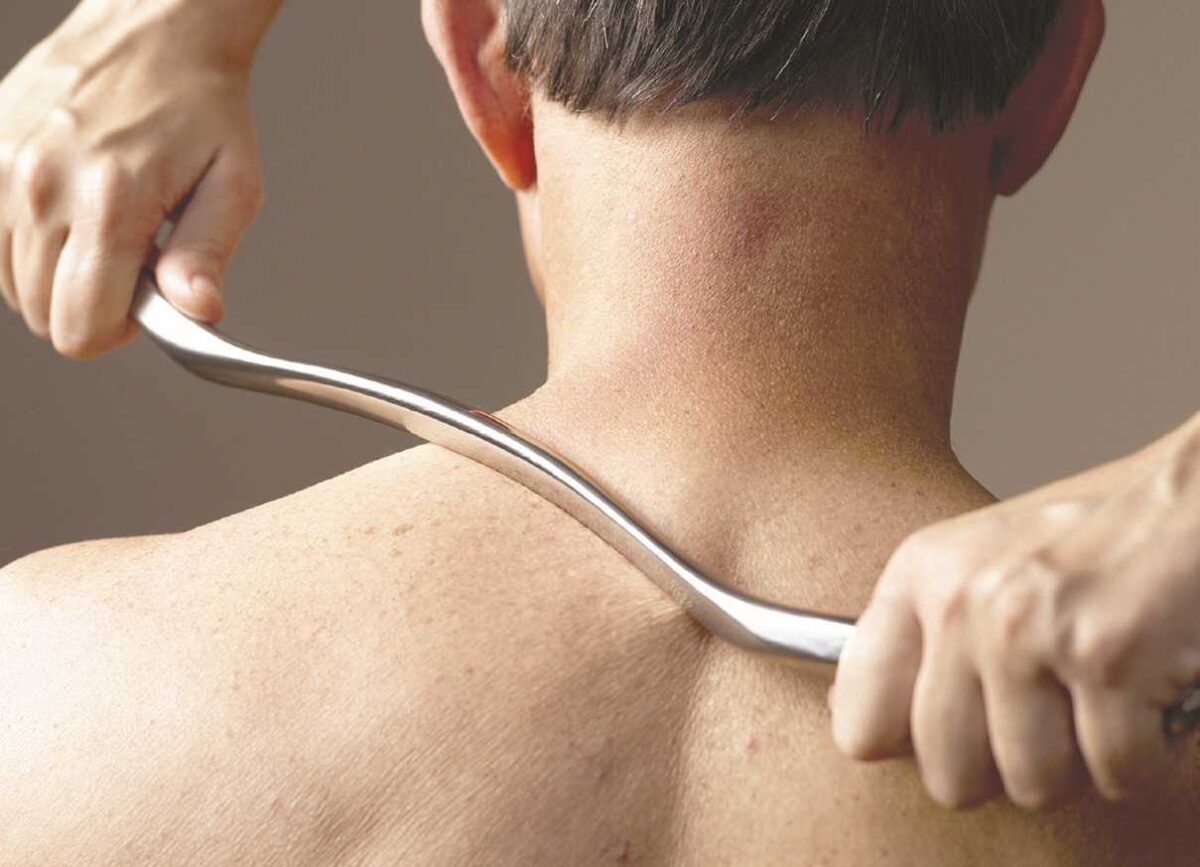
Instrument-Assisted Soft Tissue Mobilization (IASTM) (aka scraping) is a form of manual therapy used in physical therapy to treat soft tissue injuries and dysfunctions. It involves using specialized tools made from materials like stainless steel, plastic, or ceramic to apply targeted pressure to muscles, tendons, and fascia to break down scar tissue, reduce muscle tension, and promote healing.

Therapists use scraping to apply controlled microtrauma to the soft tissues, which:

  • Stimulates a localized inflammatory response.
  • Increase blood flow to the area.
  • Promote the body’s natural healing process by triggering tissue remodeling and regeneration.

Common Conditions Treated with Scraping:

Tendinitis, plantar fasciitis, carpal tunnel syndrome, muscle and ligament sprains, shin splits, scar tissue and fascial adhesions, chronic low back pain and more.

Benefits of Scraping in Physical Therapy

  • Improves Tissue Mobility: Breaks down scar tissue and adhesions that restrict movement and cause pain.
  • Pain Relief: By releasing tension in muscles and improving blood circulation, scraping can reduce pain in injured areas.
  • Neurological Benefits: The technique may also influence how the nervous system perceives pain, sometimes reducing sensitivity in sore muscles
  • Enhanced Healing: Promotes tissue regeneration by stimulating blood flow, which brings essential nutrients to the affected area.
  • Increased Range of Motion: Mobilizing tight muscles and soft tissues can lead to improved flexibility and range of motion, which is crucial for athletes and those recovering from injury.

 Is scraping painful? Scraping can cause some discomfort during and after treatment, but it is generally well-tolerated by most patients. The discomfort is like getting a deep tissue massage and depends on several factors, such as the condition being treated, the intensity of the therapy, and the patient’s pain tolerance. Communication with your Physical Therapist is key.

Scraping is an effective, evidence-based technique in physical therapy that enhances healing and recovery. Its benefits, such as improving mobility, reducing pain, and promoting faster recovery, make it an excellent option for a wide range of musculoskeletal conditions. 

Categories
All Categories

Physical Therapy vs Chronic Pain Medication

[schema type=”organization” orgtype=”LocalBusiness” url=”www.cacc-pt.com” name=”CACC Physical Therapy” description=”CACC Denver Physical Therapy is a private outpatient physical therapy clinic. In the clinic’s more than 30 years in business, CACC has become Denver’s recognized leader in orthopedic rehabilitation, work injuries, post-surgical rehabilitation, motor vehicle accident injuries, sports medicine, and hand rehabilitation.” street=”200 Quebec Street Bldg. 600 Suite 215″ city=”Denver” state=”Colorado” postalcode=”80230″ country=”US” phone=”303-341-0369″ ]

The risk of dangerous side effects of prescription drugs has become more apart of society’s conscience. With The Opioid Crisis in Colorado is making headlines, the team at CACC thought it a good idea to talk about Physical Therapy vs Chronic Pain Medications.

Pain Medications Are Not a Cure

As painkillers decreased pain perception the body becomes susceptible to further injury or damage. Our bodies depend on pain signals to alert us of injuries. When these pain signals are silenced patients can be put in danger of further complications. Not only that, since pain medications are merely a silencer and mask symptoms, in many cases the root of the problem is never solved. Chronic pain is your merely your body indicating a problem that requires treatment.

Pain Medication Side Effects

We all seen and head the long list of pain medication side effects. Some include dependency, depression, constipation, hormonal imbalances, and weakened immune systems. Now more than ever, exploring other options for pain management is a necessary pursuit. Physical Therapy techniques have been proven to help individuals decrease their pain. In numerous studies, individuals who follow a physical therapy treatment plan experienced greater reductions in pain those those who did not.

Chronic Pain Solutions

Those who suffer from conditions like carpal tunnel syndrome, shoulder pain, back pain, neck pain, headaches, arthritis, and fibromyalgia can benefit from physical therapy techniques that  work toward the goal of relaxation, decreasing pain, and achieving more flexibility. The treatments are not meant to mask the symptoms, they are a very powerful tool in the rehabilitation process.

Learn more about the  chronic pain therapies CACC Physical Therapy offers.